
Between 10 and 12 December 2024, a three-day programme of conferences, seminars, and workshops was held, focusing on digital transformation, cybersecurity, innovation, and sustainable financing for local government. The event brought together representatives of national institutions, municipalities, European networks, innovation hubs, academia, technology providers, and funding bodies. It was structured to progressively address strategic policy direction, regulatory and operational challenges, skills development, financial sustainability, and concrete technological solutions for municipalities.
The programme positioned local government not only as a beneficiary of digital transformation, but as an active actor within regional and European innovation ecosystems.
Day 1: Investor Day – Digital Infrastructure, Regulation, and Local Government Readiness (10 December 2024)
The first day of the event was dedicated to investment perspectives, regulatory developments, and the role of digital infrastructure in enabling modern, resilient local governance. The afternoon began with registration, followed by official opening remarks that framed the discussions within national and European policy priorities.
The forum began with an “Investor Day” module, opened with introductory remarks by Radoslav Rizov, Director General of the European Funds for Competitiveness Directorate at the Ministry of Innovation and Growth, Pavel Ivanov from the Institute of Public Administration (IPA), Desislava Terzieva from the Union for Economic Initiative – Plovdiv, and Hristian Daskalov, Chairman of the Board of Directors of EDIH “Trakia.” They emphasized the importance of digitalization as a key tool for improving competitiveness and data security in local government and business.
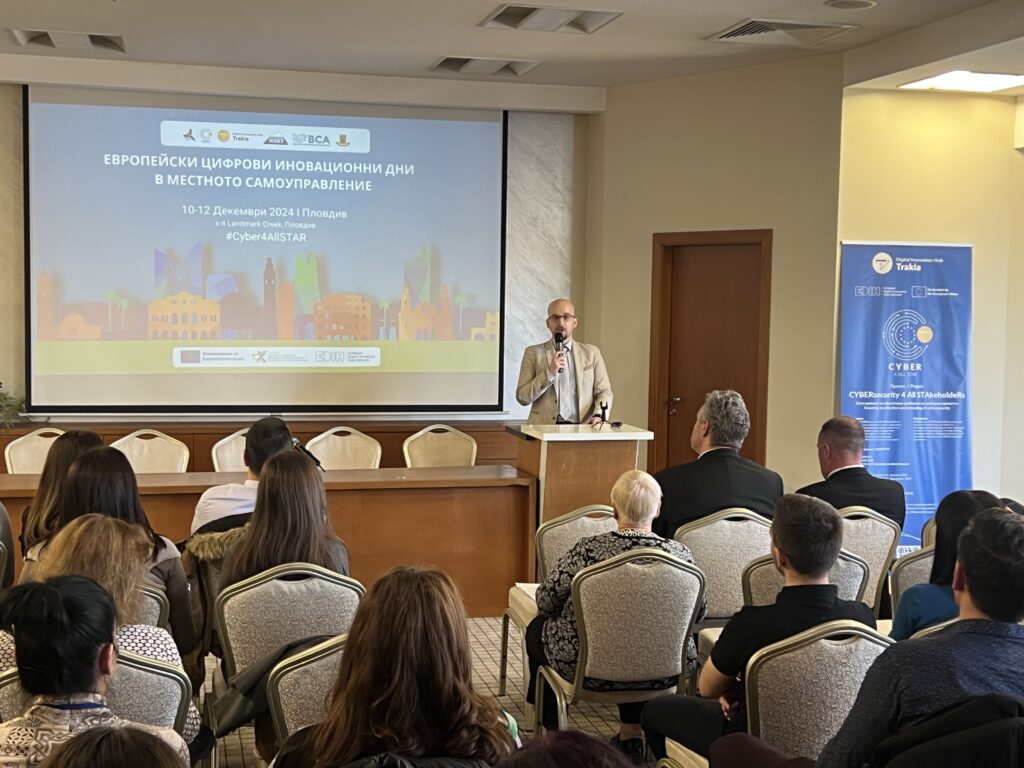
Radoslav Rizov, Director General of the Directorate General “European Funds for Competitiveness” at the Ministry of Innovation and Growth, opened the conference by emphasizing the strategic importance of European funding instruments in accelerating digital transformation at local level. He underlined that competitiveness today depends on the ability of municipalities to adopt secure, interoperable, and citizen-centric digital systems, noting that “European funds are not simply financial instruments, but mechanisms for structural change.”
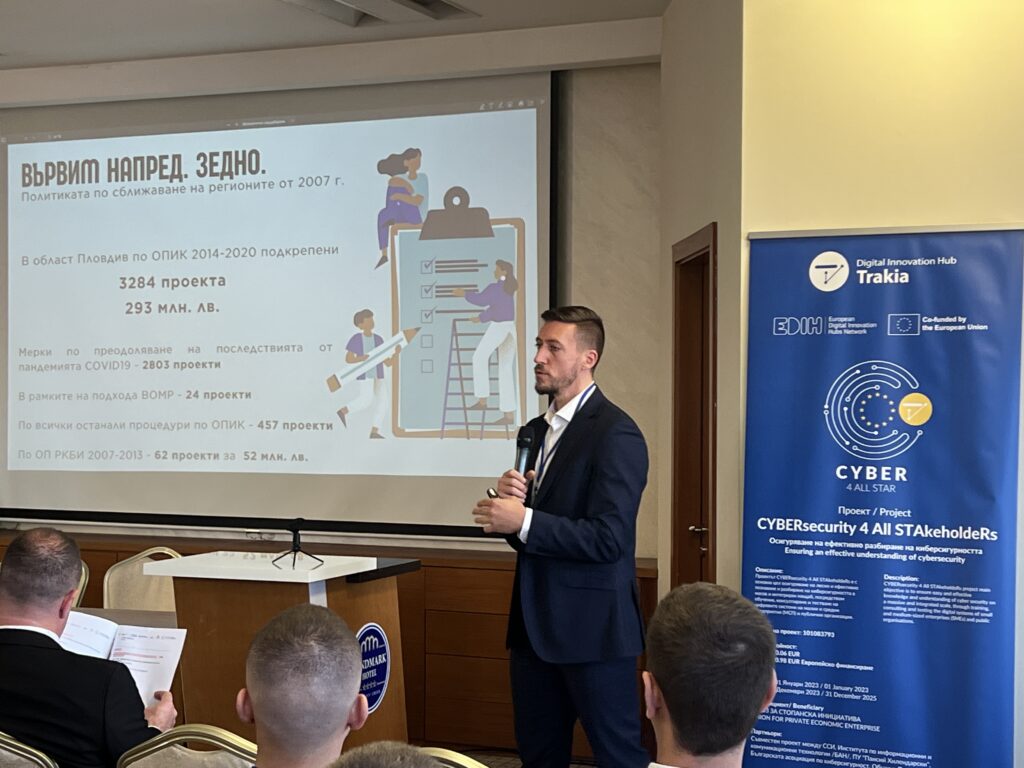
Pavel Ivanov, Director of the Institute of Public Administration highlighted the institutional capacity-building dimension, stressing that digital transformation requires not only technology, but also trained administrations capable of managing change, compliance, and service redesign. He emphasized the importance of continuous learning within public administration as a prerequisite for effective digital governance.
Desislava Terzieva, Coordinator of the Union for Economic Initiative – Plovdiv and Director of the Corporate Center of Lev Ins – Plovdiv, provided a business and regional development perspective. She stressed that local economic ecosystems benefit when municipalities act as digital innovators and early adopters, creating predictable and secure environments for businesses and investors.
The opening session concluded with remarks by Hristian Daskalov, Chairman of the Board of EDIH Trakia, who framed the role of European Digital Innovation Hubs as connectors between policy, technology, and real-world implementation. He emphasized that EDIHs are designed to translate European strategies into practical solutions for municipalities and local businesses.
The subsequent session focused on support for data protection, digital infrastructure, and emerging opportunities for local government and business. Radoslav Rizov expanded on the national funding landscape, highlighting synergies between European and national programmes and the need for coordinated planning at municipal level.
Joining online, Ivan Goychev, Deputy Mayor for Digitalization, Innovation and Economic Development of Sofia Municipality, shared practical insights from the capital city’s digital transformation journey. He emphasized that cybersecurity and data protection must be embedded by design, stating that “digital services only build trust when citizens are confident that their data is protected.”
Pavel Ivanov further addressed governance and administrative readiness, stressing that digitalization without procedural clarity and regulatory awareness creates operational risk rather than efficiency.
The afternoon continued with a B2B/B2C webinar dedicated to new regulations in digital transformation and solutions for local self-government. Moderated by Yasen Tanev, the session brought together representatives from several municipalities, including Troyan, Plovdiv, Petrich, and Bansko.
Tsvetelina Kalcheva from the Municipality of Troyan, participating online, discussed the challenges faced by smaller municipalities in interpreting and implementing new regulatory requirements. Vanko Ivanov from the Municipality of Plovdiv and Kiril Tanushev from the Municipality of Petrich shared practical experiences related to interoperability, service digitization, and cybersecurity constraints.
Desislava Hadzhiruskova, Director of the Administrative Services Directorate at the Municipality of Bansko, emphasized the importance of user-centric design and internal process optimization, noting that digital transformation must improve both citizen experience and administrative efficiency.
Representatives from municipalities already using EDIH Trakia services shared feedback on the value of structured support, consulting, and technical guidance, reinforcing the role of innovation hubs as trusted partners for local government.
The first day’s program ended with a webinar on “New Regulations in Digital Transformation,” moderated by Yasen Tanev. Representatives of municipalities such as Plovdiv, Troyan, Petrich, and Bansko discussed the challenges and opportunities that the new regulations present to local authorities, providing valuable information on the implementation of innovative solutions.
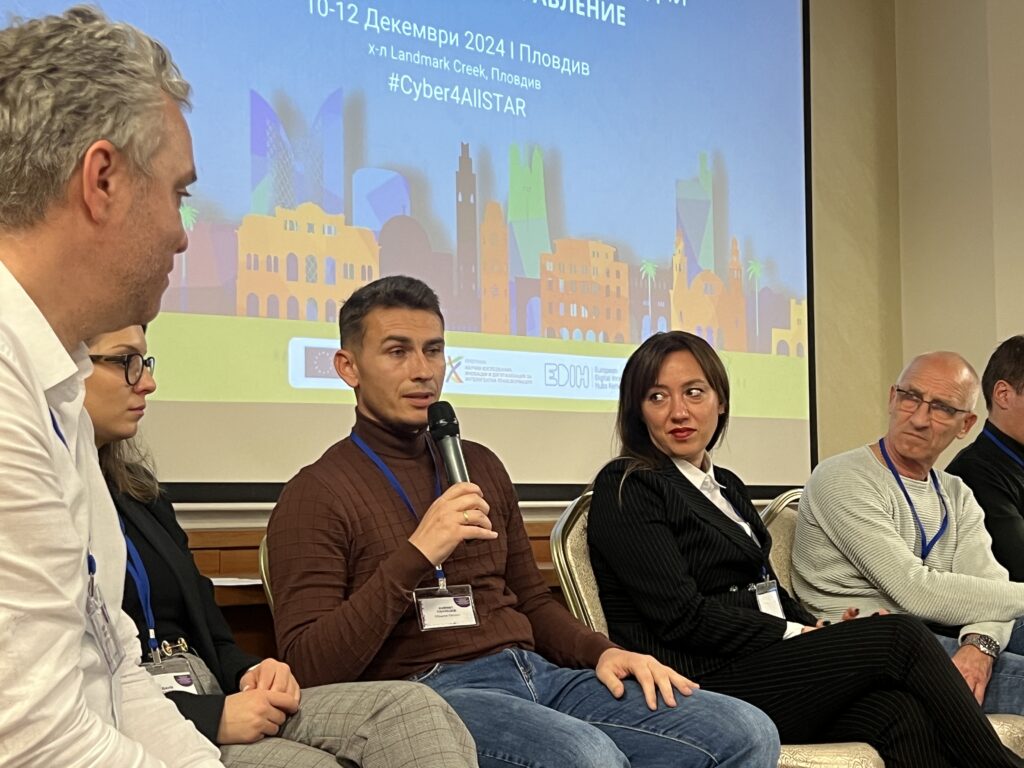
Day 2: Innovation, Skills, and Solutions for Local Government (11 December 2024)
The second day focused on innovation, skills development, and concrete solutions tailored to the needs of local government. The morning session addressed the development of skills for digital transformation and cyber defense, moderated by Yasen Tanev.
Pavel Ivanov and Tanya Chikova from the Institute of Public Administration emphasized the systemic nature of skills development, stressing that cybersecurity competence must be integrated across administrative roles rather than isolated within IT departments.
Pavel Ivanov presented the institute’s new training courses, and Tanya Ivanova-Chikova presented the chatbot chIPA. Desislava Hadzhiruskova from the Municipality of Bansko also demonstrated their municipal chatbot.
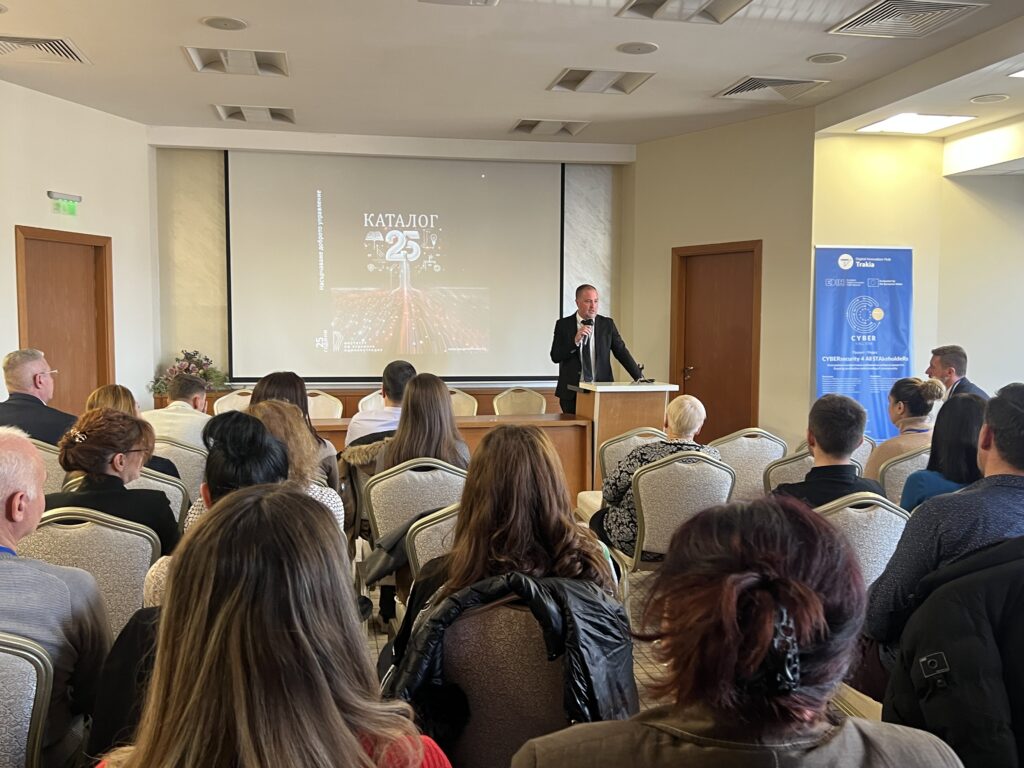
Stanislav Atanasov, Honorary Lecturer in Cybersecurity at Paisii Hilendarski University and Head of the training and testing cyber range at EDIH Trakia, presented the role of cyber ranges and practical training environments. He highlighted that realistic simulations are essential for preparing public sector staff to respond effectively to cyber incidents.
Stoyanka Kuzmanova, Senior Associate for European Program and Project Management at the Ministry of Labor and Social Policy, addressed the alignment between labor policies, reskilling initiatives, and digital transformation strategies.
Ivaylo Blagoev, Director of Contipso Learning, emphasized the importance of lifelong learning and modular training approaches, noting that cybersecurity skills must evolve continuously alongside technological change.
The late morning session focused on solutions for local government, combining innovation, research, and applied technology. Moderated by Yasen Tanev, the session featured student-developed cybersecurity solutions under the project “Smarter than a Hacker,” demonstrating the potential of academic–municipal collaboration.
Rosen Pashov, joining online from the International Technical Alliance, discussed international standards and cooperation frameworks. Alexandra Slavova, Systems Engineer at Fortinet, presented industry-grade solutions adapted to public sector needs.
Assoc. Prof. Dr. Temenuzhka Spasova, an expert in open and spatial data, GIS, and remote sensing, highlighted the growing importance of data integration and spatial intelligence for local governance. Desislava Hadzhiruskova again contributed a municipal perspective, reinforcing the need for solutions that are both secure and operationally realistic.
The afternoon was dedicated to a Financial Consulting Seminar on financially sustainable local government. Moderated by Hristian Daskalov, the session addressed funding strategies, European programmes, and long-term financial planning.
Gabriela Ruseva, Coordinator of the Living-in.EU platform at Eurocities, emphasized the role of European city networks in sharing best practices and aligning digital priorities. Dochka Vassileva, Head of the Information and Project Financing Department at the Fund of Funds in Bulgaria, presented financing instruments available to municipalities and local initiatives.
Assoc. Prof. Dr. Eng. Boyan Zhekov, National Coordinator of Horizon Europe, outlined opportunities under European research and innovation programmes, stressing the importance of strategic project design. Dilyana Gerjikova from the Chamber of Commerce and Industry – Plovdiv and the Enterprise Europe Network highlighted business support mechanisms, while Ana Georgieva from Eurocities discussed policy-level support for digital technologies.
The day concluded with a Demo Day workshop showcasing technologies and solutions supporting local self-government. Moderated by Hristian Daskalov, the session featured finalists from the “Business Angel of Plovdiv University” competition and presentations by Plamen Toshev of Acronis Bulgaria, Venelin Yordanov from Plovdiv Tech Park, Neika Kyosova from Fortinet, and Alexander Zhekov from Escom Bulgaria. These demonstrations illustrated how innovation, security, and public sector needs can converge in practical deployments.
A discussion on developing digital transformation and cyber defense skills was led by Yasen Tanev with the participation of speakers such as Stanislav Atanasov from Plovdiv University and Ivaylo Blagoev from Contipso Learning. The panel concluded with practical advice and strategies for protecting critical infrastructure, presented by experts such as Alexandra Slavova from Fortinet and Temenuzhka Spasova.
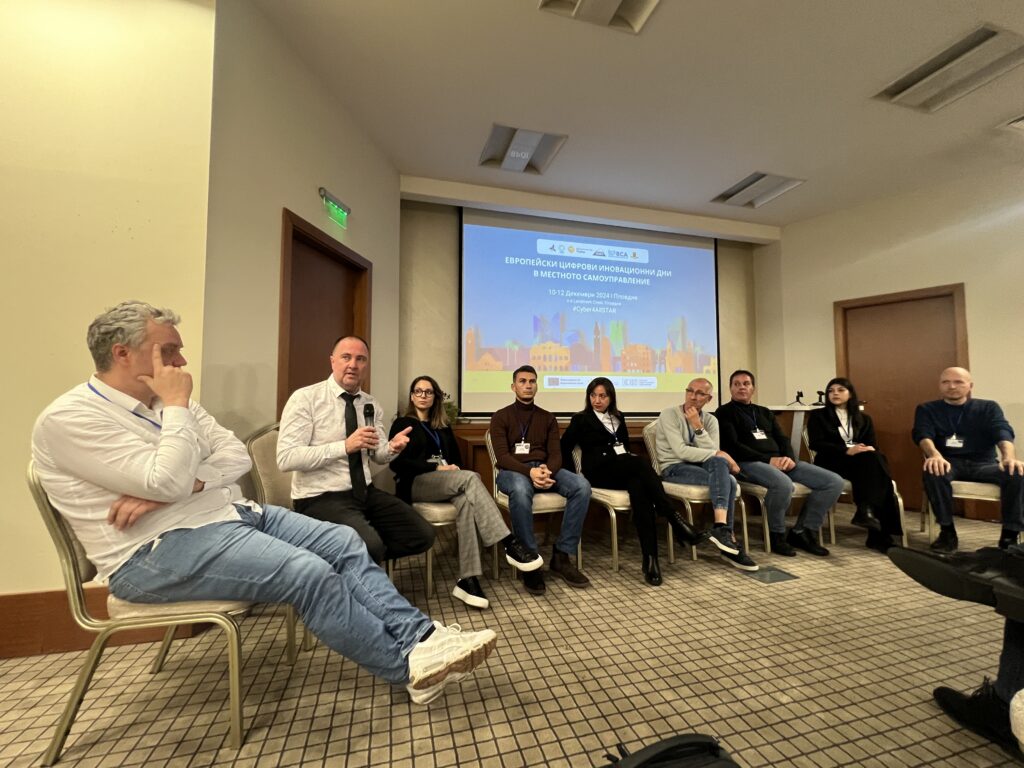
Day 3: Investment and Grant Financing Ecosystem (12 December 2024)
The final day focused on the ecosystem for supporting innovators in local government, with a dedicated workshop on investment and grant financing. Moderated by Hristian Daskalov, the session brought together representatives of European information networks, innovation hubs, and government administrations.
Krasimir Loikov from Europe Direct emphasized the importance of accessible information and citizen engagement in European programmes. Sashka Boncheva from the Women4Cyber Foundation highlighted the role of inclusive innovation and gender balance in cybersecurity ecosystems.
Joining online, Georgi Stratiev from the Administration of the Council of Ministers presented insights into the ISUN system and national funding coordination, while Svetoslav Mateev from the Regional Innovation Center “Ambitious Gabrovo” discussed regional innovation models and cooperation with Digital Innovation Hubs.
Overall Impact and Conclusions
The three-day programme demonstrated a comprehensive approach to digital transformation and cybersecurity for local government, integrating policy, skills, finance, and technology. By combining strategic dialogue with practical workshops and demonstrations, the event strengthened institutional capacity, fostered cross-sector collaboration, and highlighted concrete pathways for municipalities to engage with European innovation ecosystems.
The active involvement of EDIH Trakia throughout the programme reinforced its role as a key enabler of digital transformation, supporting municipalities not only with technology, but with strategy, skills, and access to funding. The event contributed to building a shared understanding that sustainable digital governance requires coordinated action across institutions, industry, academia, and European networks, positioning local government as a central actor in Europe’s digital future.