
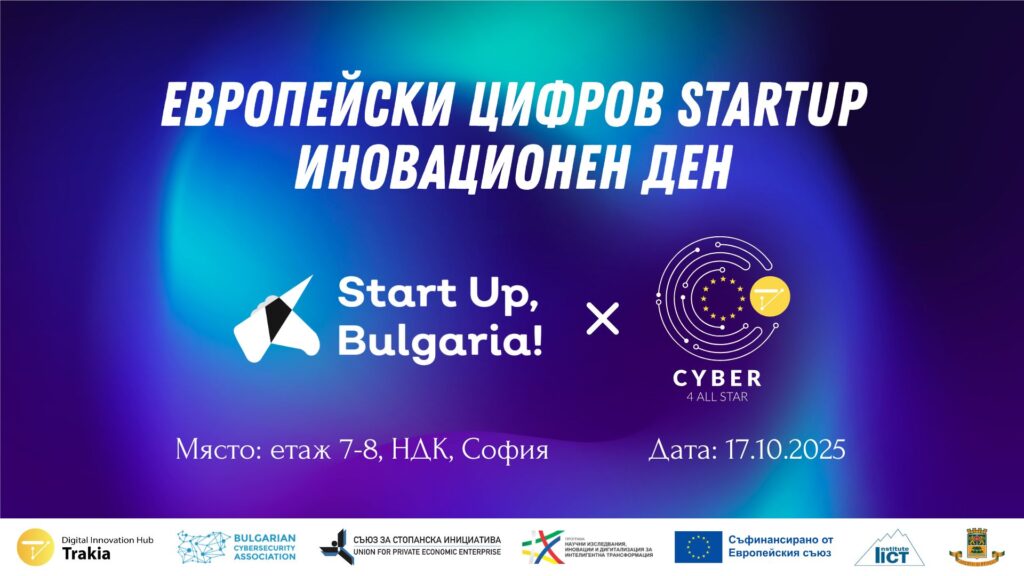
On October 17, 2025, the heart of Sofia’s innovation ecosystem was in Hall 3 of the National Palace of Culture. The European Digital Innovation Hub “Trakia,” in collaboration with Crossroads 2025 and StartUp Bulgaria, successfully organized the “European Digital Startup Innovation Day.” This specialized consultative event, divided into three modules (Innovation and Digitalization, Financial Consulting, Workshop on Investment and Grant Funding) was not merely a conference, but a strategic intervention designed to strengthen the startup ecosystem through targeted knowledge transfer, consulting, and international exposure.
As part of StartUp Bulgaria’s flagship conference and the global Startup World Cup format, the events brought together founders, investors, and innovators from Eastern Europe, the United States, and the Middle East. The day focused on three critical pillars for the survival and growth of modern businesses: cybersecurity, digitalization, and funding opportunities.
A strategic framework for growth
From the very beginning, the events were positioned as a vital component of the Cyber4AllSTAR project, funded by the Digital Europe Program and national funding instruments. The goal was clear: to move from theoretical discussions to providing startups with concrete, practical support through expert-led sessions and individual consultations.
The day began with a bustling registration at the EDIH Trakia booth, which served as a central hub for interaction throughout all the events. Here, the EDIH Trakia team presented startups with a wide range of services, ranging from grant consultations and compliance support to cybersecurity assessments and access to innovation infrastructure. This initial interaction laid the groundwork for deep, ongoing collaboration between the center and the participating companies.
Morning Insights: From Local Governance to Global Unicorns
The official opening session set a high-level strategic tone for the day. The Mayor of Sofia, Vasil Terziev, delivered an opening address titled “From Sofia to Growth – the Opportunities Opened by Artificial Intelligence”. Mayor Terziev emphasized the pivotal role cities play in fostering innovation ecosystems, framing AI as a key driver for economic growth and public sector modernization. His remarks positioned Sofia as an active participant in Europe’s digital transformation, highlighting the necessity of collaboration between municipalities and startups.
Following the Mayor, the audience was inspired by a tangible success story. Dimitar Dimitrov from Shelly Group presented a keynote titled “From Bulgaria to a Unicorn. The Story of Shelly”. Dimitrov traced the company’s journey from a local tech firm to an internationally recognized success, sharing the challenges and milestones that defined their path. His narrative reinforced a powerful message: globally competitive companies can and do emerge from Bulgaria when supported by innovation-friendly ecosystems.
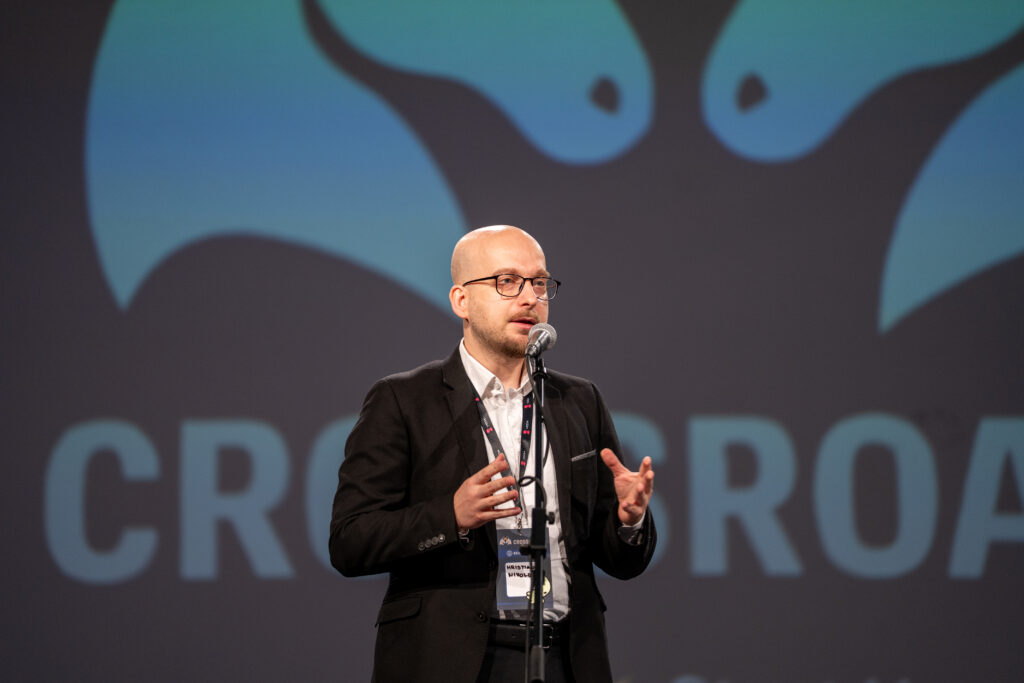
Rounding out the morning session, Hristian Daskalov, Chairman of the Board of EDIH Trakia, presented “200,000 Euro for Supporting Innovations”. He outlined the financial and non-financial instruments available through the hub, stressing that true innovation support encompasses expertise, testing environments, and regulatory guidance—not just funding.
Deep Dive: Financing, Compliance, and Cyber Resilience
A key part of the event was the “Demo Days” segment, particularly the workshop on grants and investment advice. This session provided an in-depth look at strategies for survival and success in a regulated digital economy.
Horizon Europe Consultation: Associate Professor Dr. Boyan Zhekov, National Coordinator for Horizon Europe, operated a “Reception Desk” concept, guiding startups on how to align their innovations with European priorities to access research funding. He demystified the complex application process, encouraging founders to view European programs as accessible instruments.
Long-Term Support: Hristian Daskalov highlighted the continuity of support, detailing the Cyber4AllSTAR project (running until 2025) and Cyber4All 2.0 (running until 2028), ensuring that startups engaging with the hub benefit from sustainable, long-term partnerships.
Regulatory Compliance: The event addressed the often-daunting landscape of EU regulations. Rumyana Atanasova presented on achieving cybersecurity compliance in industrial sectors (CyberSec4OT), while other sessions introduced the Open-Source Cyber Resilience Act (OSCRAT) project. These sessions emphasized that compliance is a shared responsibility and that open-source solutions can build resilience.
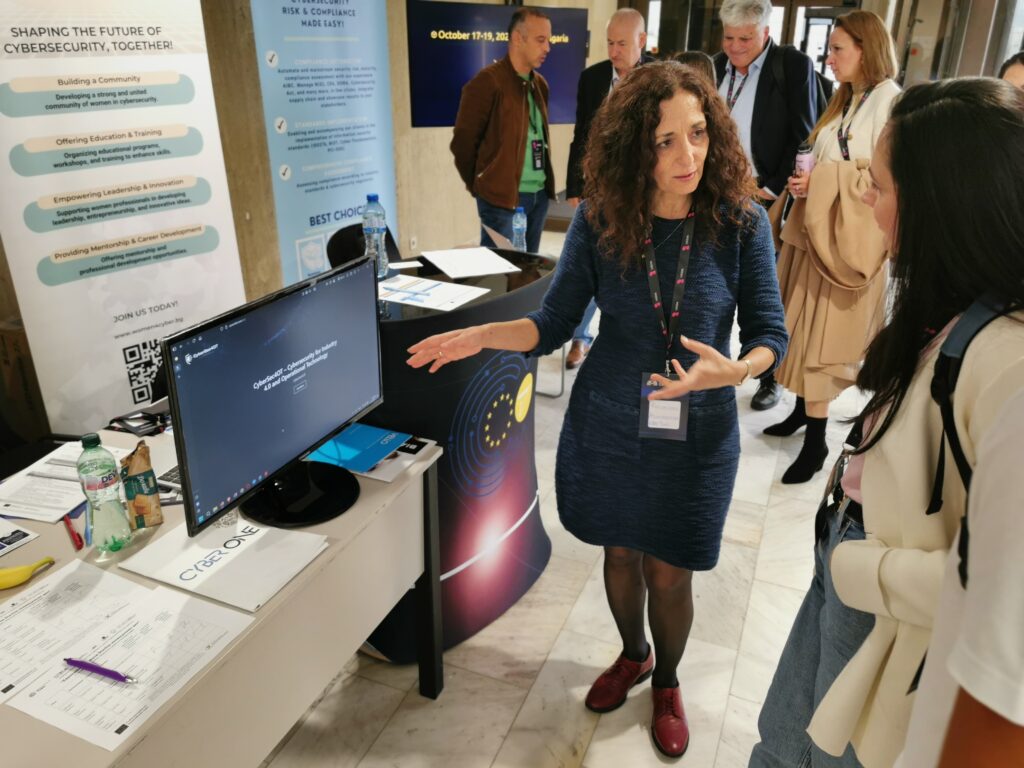
Practical Cybersecurity Tools: In a hands-on presentation, Iva Tasheva and Krasimir Simonski invited startups to check their cybersecurity state and prepare for pentesting in line with the EU Cyber Resilience Act for free. This provided participants with concrete methodologies to assess vulnerabilities without incurring excessive costs.
Connecting with Capital and Investors
Recognizing that funding is vital for any startup, the events included special sessions on financial engineering and investment. A roundtable discussion facilitated direct interaction between startups, investors, and potential clients, where participants presented their ideas in 60-second intervals.
Adding an international perspective, Rebecca Gong, Head of Corporate Development and Regulatory Affairs at HQLAᵡ, delivered a keynote on “Fundraising Without the Fluff: Lessons from the Investor’s Side”. She offered a candid look at the investor decision-making process, highlighting common pitfalls and emphasizing the need for credibility, clarity, and regulatory awareness. This session bridged the gap between startup expectations and the realities of securing capital.
The Cyber4AllSTAR Ecosystem in Action
The final block of the day, titled “The Cyber4AllSTAR Ecosystem in Action,” brought together a diverse group of speakers to discuss the practical application of technology and security.
Strategic Risk: Kiril Grigorov’s presentation, “What to Build — and What Risks to Watch,” was one of the best-attended sessions. He addressed the delicate balance between innovation and risk, particularly regarding AI and data protection.
Cyber Insurance: Vladislav Milev from Lev Ins introduced cyber insurance as an emerging instrument for managing digital risks.
Industrial & Startup Security: Experts like Nikola Petkov (Siemens Bulgaria) and Alexander Nenkov (AKAT Technologies) provided structured introductions to industrial cybersecurity and security principles tailored for early-stage companies.
Education: The session concluded with a presentation by Petar Kanchev of EDIH Trakia, who outlined cybersecurity training programs and emphasized that skills development is crucial for digital resilience.
Celebrating Success on the Global Stage
The events also served as a celebration of Bulgarian innovation as part of the Startup World Cup. The winner of the regional tournament will represent the country in San Francisco, where they will compete for a $1 million investment.
Ethermind received special recognition for its success in the San Francisco competition. In addition, the event celebrated a number of nominated competitors, including Morph AI, Momfident, BuddyGuard, Nifty IP, Bonded, Barin Sports, PodClips, and nextribe. These companies represent various sectors, ranging from ethical AI and Web3 identity solutions to sports analytics and sustainable hospitality. As a concrete follow-up, EDIH Trakia provided service vouchers to all nominated companies to ensure their continued development.
Conclusion
European Digital Innovation Start-up Day 2025 was a comprehensive, multifaceted initiative that successfully combined inspiration with expert knowledge and practical support. Bringing together founders, investors, public institutions, and international partners, the events demonstrated the power of a coordinated ecosystem for accelerating innovation.
Thanks to the efforts of EDIH Trakia, Crossroads, and their partners, the events not only raised awareness about cybersecurity and funding but also provided the specific tools and connections Bulgarian startups need to compete on the global stage.
Събитията са по проект № 101083793 – CYBER4All STAR – DIGITAL-2021-EDIH-01 на Европейската комисия и проект № BG16RFPR002-1.001-0003 по програма „Изследвания, иновации и дигитализация за интелигентна трансформация“. Изразените възгледи и мнения са само на автора(ите) и не отразяват непременно възгледите и мненията на Европейския съюз. Нито Европейският съюз, нито предоставящият орган са отговорни за тях.